

A Beginner’s Guide to Glazing Ceramics: Dipping Glazes and Underglazing at Myrtle’s Clayhouse
For many ceramic artists, glazing is where pottery truly comes to life.
A piece may begin as a lump of clay and evolve through trimming, drying, and bisque firing, but glazing is what transforms it into a finished object with depth, texture, color, and personality. It is also one of the most exciting and sometimes intimidating stages of the ceramic process.
At Myrtle’s Clayhouse in Ridgewood, glazing is treated as both a technical skill and a creative practice. Whether someone is experimenting with layered dipping glazes for the first time or carefully painting detailed underglaze illustrations onto a mug, glazing becomes a major part of how ceramic artists develop their personal style.
Myrtle’s Clayhouse was built around the idea that ceramics should be approachable, community-driven, and creatively fulfilling for all skill levels. Learning glaze techniques is not simply about finishing pottery. It is about experimentation, confidence, and developing a deeper understanding of ceramic surfaces and materials.
This guide focuses specifically on electric kiln ceramics and explores two of the most commonly used glaze approaches:
Dipping glazes
Underglazing
Both methods offer completely different visual possibilities, and many ceramic artists eventually combine them together in their work.

What Is Glazing in Ceramics?
Glaze is a liquid coating applied to ceramic surfaces before the final kiln firing. During firing, the glaze melts and chemically transforms into a glass-like surface that becomes fused to the clay body.
Glazes serve both practical and aesthetic purposes.
Functionally, glaze helps make pottery food-safe and water-resistant. Artistically, it introduces color, movement, texture, opacity, gloss, matte surfaces, and visual depth.
In electric kiln ceramics, most glazes are fired in oxidation atmospheres, meaning oxygen remains present during firing. This creates more predictable glaze outcomes than atmospheric firings like wood or reduction gas kilns.
That predictability makes electric kiln glazing ideal for both beginners and experienced ceramic artists who want consistency while still allowing room for creativity and experimentation.
At Myrtle’s Clayhouse, students often begin learning glazing techniques through wheel throwing and handbuilding pottery classes before continuing to explore more advanced glaze combinations through memberships and open studio practice.
What Are Dipping Glazes?
Dipping glazes are one of the most common glazing methods used in community ceramics studios and production pottery.
A dipping glaze is exactly what it sounds like. Bisque-fired pottery is dipped directly into a bucket of glaze for a few seconds, allowing an even coat to cover the surface.
This method creates smooth, consistent glaze application and allows ceramic artists to experiment with layering multiple glazes together.
Dipping glazes are especially popular in electric kiln studios because they:
Apply quickly
Produce reliable results
Work well for functional pottery
Encourage glaze layering experimentation
Allow studios to maintain larger shared glaze systems
At Myrtle’s Clayhouse, dipping glazes are often one of the first glaze techniques students learn because they help beginners understand glaze thickness, firing behavior, and surface chemistry.
How Do Dipping Glazes Work?

When bisque-fired pottery is dipped into glaze, the porous clay body immediately absorbs water from the glaze mixture. This leaves behind a thin layer of minerals and glaze materials on the surface.
Once dry, the piece is loaded into the kiln for glaze firing.
During firing, the glaze materials melt and interact with one another, creating the finished ceramic surface.
The final appearance depends on several factors:
Clay body
Glaze thickness
Firing temperature
Layering combinations
Cooling cycle
Surface texture
Application method
This is why glaze testing becomes such an important part of ceramics education.
Two pieces dipped in the exact same glaze may still look slightly different depending on how they were applied or fired.
Why Do Ceramic Artists Layer Dipping Glazes?
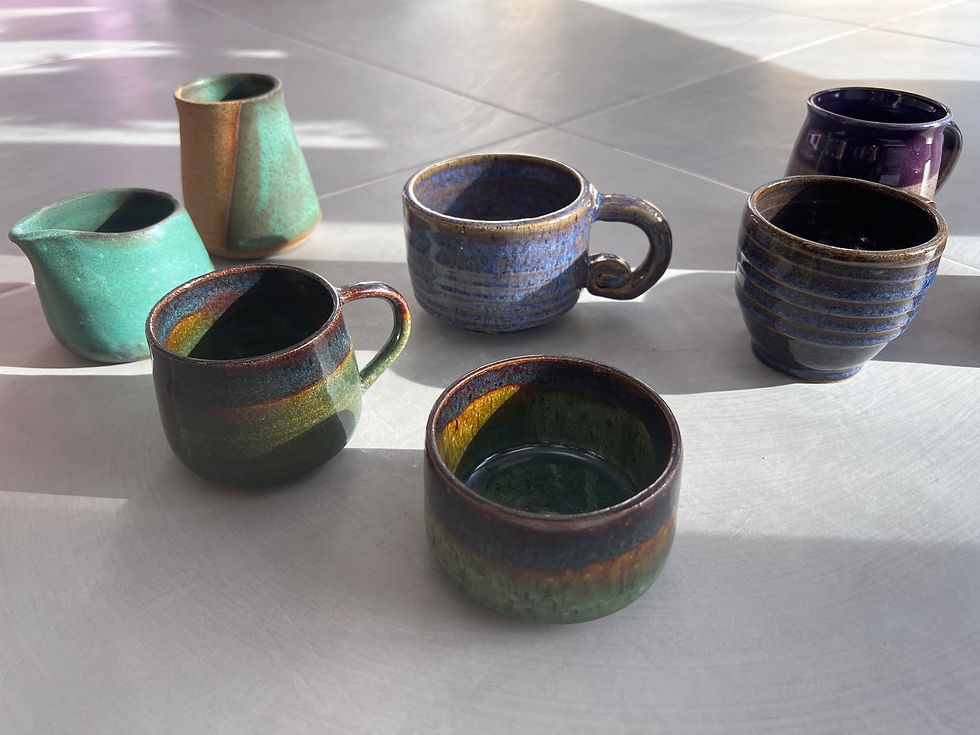
Glaze layering is one of the most exciting aspects of electric kiln ceramics.
Many studio glazes are designed specifically to interact with one another. When layered, they can create movement, color variation, speckling, crystal effects, drips, and unexpected textures.
For example:
A matte glaze layered over a glossy glaze may produce subtle variation and depth
Iron-rich glazes may break differently over texture
Floating glazes may pool blue over darker clay bodies
Layering can create painterly transitions and atmospheric surfaces
This process encourages experimentation and helps ceramic artists develop their own visual style over time.
At Myrtle’s Clayhouse, students and members often share glaze test tiles, discuss combinations, and compare firing outcomes together. That collaborative learning environment is one reason ceramics studios naturally become creative third spaces where people build both technical skills and community connections.
If you are interested in continuing your ceramic practice long-term, explore Myrtle’s Clayhouse membership options for independent studio access and glaze experimentation.
Common Mistakes With Dipping Glazes
Glazing can feel unpredictable at first, especially for beginners. Fortunately, most glaze problems come from a few common issues.
One of the most frequent mistakes is applying glaze too thickly. Excessively thick glaze can run during firing and fuse pieces to the kiln shelves.
Another common issue is insufficient glaze coverage. Thin application may result in dry or patchy surfaces.
Beginners also sometimes forget to clean glaze from the bottom foot of pottery before firing. Because glaze melts into glass, any glaze left on the bottom can permanently stick pieces to kiln shelves.
Learning proper glaze application takes time and repetition, which is why consistent studio practice becomes so valuable.
What Is Underglaze?
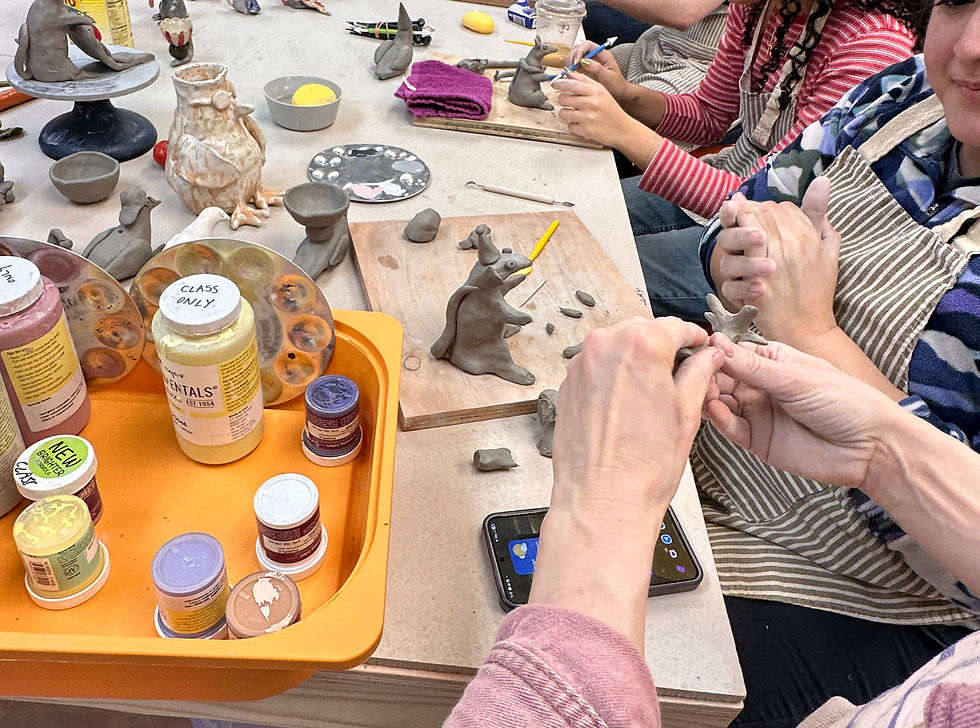
Underglaze is a decorative ceramic material used to add detailed imagery, illustrations, patterns, and color to pottery before the final glaze firing.
Unlike dipping glazes, underglazes function more like paint.
They can be brushed, painted, drawn, sponged, carved through, or layered onto clay surfaces. After application, artists typically cover the underglaze with a transparent glaze before glaze firing.
Underglaze allows for significantly more precision and illustration-based work than traditional dipping glazes.
This technique is especially popular for:
Hand-painted ceramics
Graphic illustration
Surface design
Lettering
Decorative storytelling
Pattern work
Sgraffito carving
Colored imagery
In many ways, underglaze bridges ceramics with drawing and painting practices.
When Should You Apply Underglaze?

Underglaze can be applied at several different stages:
Greenware
Leather-hard clay
Bone dry clay
Bisque-fired pottery
Each stage creates slightly different results.
Many ceramic artists prefer applying underglaze to leather-hard clay because the surface remains absorbent and easier to carve or manipulate.
Others prefer bisque-fired surfaces because they allow for cleaner brushwork and more controlled detail.
At Myrtle’s Clayhouse, students often experiment with multiple underglaze techniques across different stages to better understand how surfaces respond during firing.
Why Is Underglaze So Popular in Modern Ceramics?
Underglaze has become increasingly popular because it allows ceramic artists to create highly personal and illustrative work.
Social media has also contributed to the rise of underglaze aesthetics, with many contemporary ceramic artists incorporating:
Illustrated surfaces
Graphic line work
Handwritten text
Character design
Botanical imagery
Abstract painting
Tattoo-inspired artwork
Because electric kilns produce reliable firing results, artists can create more controlled and repeatable underglaze surfaces compared to atmospheric firings.
This makes underglazing ideal for artists interested in surface decoration and storytelling.
Can You Combine Dipping Glazes and Underglaze?
Absolutely.
Many ceramic artists combine both methods together. For example, an artist may paint detailed underglaze illustrations onto a mug before dipping the interior in glaze.
This combination creates enormous creative flexibility.
Learning how glaze chemistry and surface decoration interact is part of what makes ceramics such a deep and rewarding medium.
Why Learning Glazing Takes Time
One of the most important things to understand about ceramics is that glazing is learned through practice rather than memorization.
Every kiln firing teaches something.
Even experienced ceramic artists still test new glaze combinations, refine application methods, and encounter unexpected results. That unpredictability is part of what keeps ceramics exciting.
At Myrtle’s Clayhouse, glazing is approached as an evolving creative process rather than a rigid technical system. The studio encourages experimentation, curiosity, and collaborative learning, helping students develop both confidence and technical understanding over time.
Because the studio is located in Ridgewood and deeply connected to the broader creative community established through Bushwick Ceramics, members often learn as much from one another as they do from formal instruction.
That collaborative environment is one reason community ceramics studios remain such valuable creative spaces in New York City.
If you are interested in learning glazing techniques firsthand, explore beginner-friendly pottery classes and ceramic workshops at Myrtle’s Clayhouse.
Glazing as Creative Identity
Over time, many ceramic artists develop a recognizable relationship with glaze.
Some become known for layered atmospheric surfaces. Others focus on detailed underglaze illustration. Some prefer matte neutrals while others chase bright, glossy color combinations.
Glazing eventually becomes part of an artist’s voice.
That evolution takes time, experimentation, and repetition. It also happens much faster inside supportive studio communities where people exchange ideas, troubleshoot kiln results, and inspire one another creatively.
At Myrtle’s Clayhouse, glazing is not treated as an afterthought. It is considered an essential part of the creative process and one of the most rewarding aspects of ceramics practice.
Whether someone is dipping their very first bowl into glaze or painting intricate underglaze illustrations onto sculptural work, glazing becomes another way people connect creativity, craftsmanship, and community together.
To continue developing your ceramic skills in a welcoming studio environment, learn more about ceramics memberships at Myrtle’s Clayhouse in Ridgewood.
You can also book pottery classes and workshops here.

FAQ
What is the difference between dipping glaze and underglaze?
Dipping glaze is used to coat pottery in a glass-forming surface that melts during firing. Underglaze is primarily decorative and used for painting or surface design beneath a clear glaze.
Can beginners use dipping glazes?
Yes. Dipping glazes are one of the most beginner-friendly glazing methods because they apply quickly and consistently.
Do you need clear glaze over underglaze?
In most cases, yes. Clear glaze helps seal and protect underglaze decoration while creating a finished ceramic surface.
Are electric kiln glazes food safe?
Many cone 5 and cone 6 electric kiln glazes are food safe when properly formulated and fired correctly. Always confirm glaze safety with studio guidelines and manufacturer information.
Can you combine underglaze with dipping glazes?
Yes. Many ceramic artists use underglaze for detailed imagery and dipping glazes for broader surface coverage or layered effects.
Where can I learn ceramic glazing in Ridgewood?
You can learn glazing, wheel throwing, handbuilding, and surface decoration techniques at Myrtle’s Clayhouse in Ridgewood through classes, workshops, and memberships.


Comments