

Third Spaces in Ceramics: Why Community Studios Matter More Than Ever
In a city like New York, it is surprisingly easy to feel isolated.
You can spend an entire day surrounded by people on trains, sidewalks, in cafés, and offices while never experiencing a real connection. Modern life has become increasingly optimized for convenience, speed, and digital interaction. Food gets delivered. Meetings happen on Zoom. Friendships exist in group chats. Entertainment is streamed alone on couches after long workdays.
The result is that many people are searching for something they cannot always name directly: community.
That is where third spaces come in.
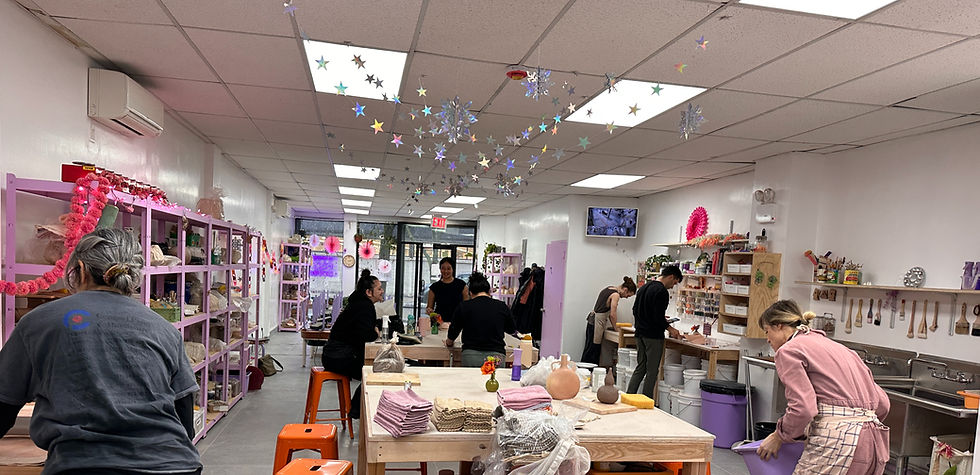
Home is the first space. Work is the second. A third space is somewhere people consistently gather outside those environments. It is where relationships form organically, conversations happen naturally, and routines become meaningful. Historically, third spaces included cafés, libraries, neighborhood bars, churches, parks, and community centers.
Today, ceramics studios are becoming one of the most important modern third spaces in urban life.
At Myrtle’s Clayhouse in Ridgewood, ceramics is about far more than pottery. It is about building creative routines, meeting people, developing skills, and becoming part of a welcoming local community. Owned by the same team behind Bushwick Ceramics, Myrtle’s Clayhouse was built with the belief that creative spaces should feel warm, accessible, collaborative, and deeply human.
Clay just happens to be the medium that brings people together.
What Is a Third Space?
The term “third space” was popularized by sociologist Ray Oldenburg in his 1989 book The Great Good Place. He described third spaces as environments separate from home and work that help create healthy communities and stronger social connection.
Third spaces are important because they allow people to exist without constant pressure to perform professionally or socially. They create environments where consistency, familiarity, and casual interaction slowly build trust and belonging over time.
A ceramics studio naturally supports this dynamic.
People return weekly for classes, memberships, glazing sessions, open studio time, and kiln pickups. Over time, faces become familiar. Conversations deepen. People begin sharing ideas, helping each other troubleshoot techniques, celebrating creative wins, and encouraging one another through failures.
Unlike many transactional experiences in New York City, ceramics rewards patience and repetition. You cannot rush clay. That slower pace creates room for connection.

Why Are Ceramics Studios Becoming Popular Third Spaces?
Part of the reason ceramics studios have grown in popularity is that they solve multiple modern problems simultaneously.
People are searching for:
Creative outlets
Offline hobbies
Stress relief
Community involvement
Skill development
Healthier relationships with technology
More meaningful routines
Ceramics addresses all of those needs in one environment.
When someone walks into a studio for the first time, they may think they are simply signing up for a pottery class. What often happens instead is that they begin building an entirely new rhythm in their life.
A ceramics studio becomes somewhere you look forward to visiting every week. It becomes part of your neighborhood identity. It becomes a place where people know your projects, ask how your week was, and celebrate your progress.
That kind of consistency matters more than ever in modern cities.
At Myrtle’s Clayhouse in Ridgewood, the studio was intentionally designed to feel inviting and community-focused. The open layout, natural light, professional instruction, and welcoming atmosphere encourage conversation and collaboration rather than competition.

How Does Ceramics Help Build Community?
Ceramics creates a unique kind of social interaction because the activity itself lowers barriers between people.
Everyone starts as a beginner at some point.
Clay is humbling. It requires patience, focus, and repetition. Even highly experienced artists still make mistakes, recycle pieces, and learn continuously. That shared vulnerability creates a more equal environment than many other social settings.
In a ceramics studio, you may find:
Designers sitting beside accountants
College students working next to retirees
New Yorkers who just moved to the city meeting people who have lived there for decades
Friends attending together alongside people arriving completely alone
The studio becomes a rare environment where conversations happen naturally without forced networking or social pressure.
Someone asks how to center clay. Another person shares glaze advice. Someone compliments a finished mug. Another person recommends a local coffee shop or live music venue nearby.
These small moments accumulate over time into genuine community.
At Myrtle’s Clayhouse, community involvement is central to the studio’s identity. Being located in Ridgewood allows the studio to serve as both a creative destination and a neighborhood gathering space. Many members discover the studio through friends, local recommendations, or community events and continue returning because of the people they meet inside.
Why Does Clay Help People Disconnect From Screens?
Modern life is overwhelmingly digital.
Most people spend their days moving between laptops, phones, notifications, emails, and social feeds. Even relaxation often involves more screen time.
Ceramics offers something increasingly rare: full physical presence.
When throwing on the wheel or handbuilding with clay, your attention has to remain in the moment. Your hands are occupied. Your focus shifts toward texture, pressure, movement, and form. Notifications become less important because clay demands concentration.
This is one reason ceramics has become closely associated with mindfulness and stress reduction.
Ceramics is not simply passive entertainment. It is participatory creativity. That distinction matters.
People leave studios feeling mentally refreshed because they have spent time creating something tangible in the physical world rather than consuming digital content.
Can Ceramics Improve Creativity and Confidence?
One of the most overlooked benefits of ceramics is how dramatically it can improve creative confidence over time.
Many adults stop making things entirely after childhood. Creative hobbies often become replaced by work obligations, errands, and passive entertainment. Ceramics reintroduces experimentation and play into people’s lives.
That process changes how people think.
Learning ceramics teaches:
Patience
Problem solving
Adaptability
Focus
Creative risk-taking
Process-oriented thinking
Every failed piece teaches something valuable. Every successful piece builds confidence.
Over time, many students begin applying that mindset outside the studio as well. People often report feeling more confident trying new things, engaging socially, or pursuing creative interests in other parts of life.
This is one reason membership-based studios become so impactful long term.
At Myrtle’s Clayhouse memberships, members gain ongoing access to a creative environment that supports both artistic growth and social connection. Membership transforms ceramics from a one-time activity into an evolving creative practice.

Why Membership Studios Create Stronger Communities
Drop-in experiences can be fun, but memberships create continuity.
When people return week after week, relationships naturally deepen. Members begin recognizing each other’s projects, artistic styles, and routines. The studio develops its own culture and personality.
That consistency is one reason membership studios often become true third spaces.
At Myrtle’s Clayhouse, memberships allow people to:
Develop long-term ceramic skills
Work on independent projects
Spend more time in a creative environment
Build relationships with fellow members
Become part of the larger Ridgewood ceramics community
For many members, the studio eventually becomes one of the most meaningful parts of their weekly routine.
If you are looking to become part of a welcoming ceramics community in Ridgewood, explore the ceramics membership options at Myrtle’s Clayhouse.
What Makes Ridgewood an Ideal Home for a Ceramics Studio?
Neighborhood matters deeply when building a third space.
Ridgewood has become known for its creative energy, independent businesses, artists, musicians, and strong local community culture. Unlike environments built entirely around consumption, neighborhoods like Ridgewood still prioritize local gathering spaces and collaborative creative culture.
Myrtle’s Clayhouse reflects that spirit.
The studio continues the community-oriented philosophy established through Bushwick Ceramics while creating a unique identity rooted in Ridgewood itself. The goal is not simply to provide pottery classes. The goal is to create a welcoming environment where people can build routines, friendships, and creative confidence.
That local focus helps transform the studio from a business into a genuine neighborhood institution.
The Future of Third Spaces
As cities continue becoming more digitally driven and socially fragmented, physical community spaces will only become more important.
Ceramics studios uniquely combine all of those elements in one place.
The value of pottery is not just the object you bring home. It is the process. The conversations. The repetition. The community. The ritual of showing up consistently and making something with your hands alongside other people.
Third spaces matter because human beings were never meant to live entirely through screens and transactions.
We need places where we can simply exist together.
Ceramics studios are becoming one of the last places where strangers still naturally become neighbors.
And honestly, that may be just as important as the pottery itself.
If you are ready to experience ceramics as more than just a hobby, explore pottery classes at Myrtle’s Clayhouse in Ridgewood and become part of a growing creative community.
FAQ
What is a third space in ceramics?
A third space in ceramics refers to a pottery studio or creative environment where people gather outside of home and work to build community, develop skills, and connect socially through shared creative activity.
Why are ceramics studios good for community building?
Ceramics studios encourage collaboration, conversation, and consistency. People naturally interact while learning techniques, sharing tools, discussing projects, and attending classes regularly, which helps build long-term relationships and community connection.
Can pottery classes help reduce stress?
Many people find pottery calming because it requires focus, hands-on creativity, and physical presence. Creative activities such as ceramics can support mindfulness, relaxation, and reduced screen time.
What are the benefits of joining a ceramics membership?
Ceramics memberships provide ongoing access to studio space, equipment, creative routines, and community interaction. Memberships also allow students to improve skills more consistently over time.
Is Myrtle’s Clayhouse beginner friendly?
Yes. Myrtle’s Clayhouse offers pottery classes for beginners through advanced students, with welcoming instructors, community-focused programming, and a supportive studio environment in Ridgewood.
Where can I book pottery classes at Myrtle’s Clayhouse?
You can explore available pottery classes and workshops here.


Comments